New research from the Countryside and Community Research Institute (CCRI) shows how England’s devolution programme could unlock the delivery of affordable homes in rural communities – but only if rural priorities are built into local strategies and backed by national safeguards.
The research is published today [3 December 2025] by The Rural Housing Network (RHN) in a major new report, English Devolution and Rural Affordable Housing: Opportunities and Risks.
It finds that devolution offers powerful new tools – including Spatial Development Strategies and Strategic Place Partnerships – that could be used to meet rural housing needs. But without deliberate action, rural communities risk being overlooked.
Key findings:
- Devolution offers new tools – but no rural guarantees. Mayoral and County Combined Authorities now have powers over housing and planning, but the national framework contains no requirement to address rural needs. Outcomes will depend on local leadership and choices.
- Rural housing needs are acute – and could easily be overlooked. House prices in rural areas average about 8.8 times local incomes (vs ~7.6 in urban areas); social housing waiting lists in rural communities have risen ~31% (2019–2022), and rural homelessness is up ~40% since 2018/19.
- Leadership and governance matter. Where elected mayors and local leaders champion rural housing – as in York & North Yorkshire – rural priorities are embedded in strategies and delivery plans. Without this leadership, rural communities risk being sidelined.
- Strong partnerships and Rural Housing Enablers are critical. The presence of active rural housing partnerships, community-led housing enablers, and funded Rural Housing Enablers (RHEs) directly correlates with better outcomes. These networks help identify sites, broker delivery, and maintain momentum through governance changes.
- Outcomes will vary – postcode lottery is a real risk. Without safeguards, devolution could create a postcode lottery – where outcomes vary dramatically depending on local leadership. For example, one county might fund dozens of rural homes, while a neighbouring county builds none. This risks deepening inequality between rural communities.
Rural housing in the national programme
The Government’s Social and Affordable Homes Programme (SAHP) 2026–2036 explicitly states that it will support affordable housing delivery in rural communities – but this is not guaranteed.
Homes England has acknowledged the unique challenges of rural housing by agreeing to evaluate funding bids from rural areas with an understanding of their higher costs.
However, because there is no specific target set for rural affordable housing, whether or not new rural homes are delivered will ultimately depend on whether regional leaders choose to make rural housing a priority in their local plans and strategies.
This also requires national leadership, and the report calls for amendments to the Devolution and Community Empowerment Bill to include a duty to consider rural needs and enable the appointment of rural commissioners.
Recommendations
The report sets out six key recommendations:
- Embed rural representation and accountability via amendments to the Devolution Bill
- Engage early and proactively in the devolution process to secure rural visibility
- Embed rural priorities in Spatial Development Strategies and Strategic Place Partnerships
- Strengthen evidence of rural housing need at parish level
- Retain and develop Rural Housing Partnerships and the Rural Housing Enabler network
- Strengthen rural planning mechanisms, including support for Rural Exception Sites
Dr Demelza Jones, CCRI, said: “Our research shows that strong rural partnerships have helped secure devolution deals and strategies that prioritise rural affordable housing – leading to better outcomes for communities.”
Jo Lavis, Rural Housing Solutions, said: “We’re calling on local leaders, Homes England, and Government to recognise that rural areas face unique challenges. Devolution must deliver for the countryside as well as for our cities.”
Why it matters
A handful of affordable homes in a village can keep a school open, support a local shop, and help older residents stay near family. Devolution offers a chance to join up housing with transport, jobs, and services in a way that fits rural life – but that won’t happen by accident.
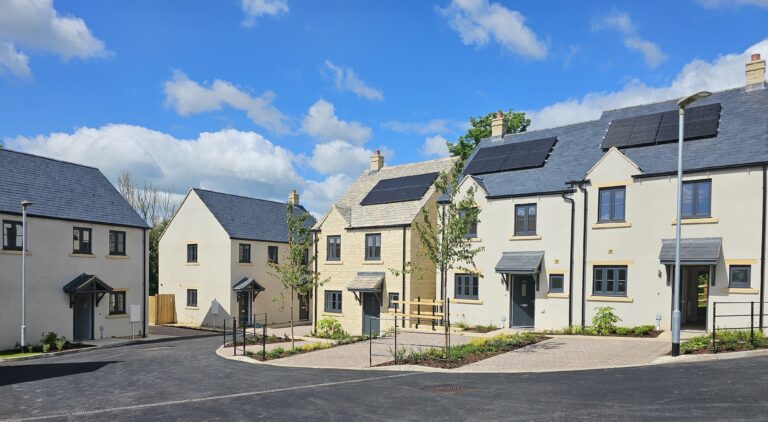
Main image: Affordable rural housing in Avening, Gloucestershire. Credit: ©English Rural
Further information
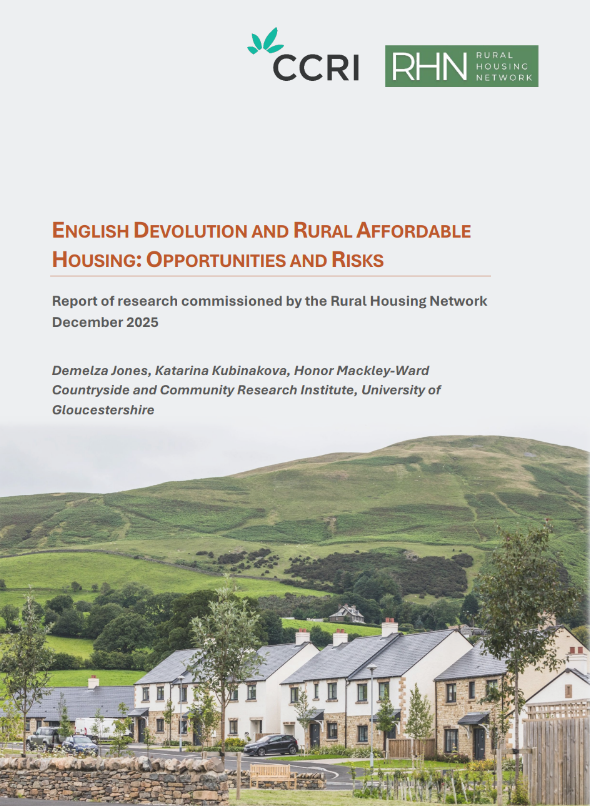
Download the report English Devolution and Rural Affordable Housing: Opportunities and Risks.
Download the Advocacy Report
Research commissioned by: Rural Housing Network
Case Study Areas: York & North Yorkshire, Devon & Torbay, Gloucestershire
For more information:
Demelza Jones, CCRI, djones28@glos.ac.uk
The CCRI research team



You may also be interested in:

Evaluation of Rural Housing Enabler Programme published

Why rural affordable housing is so crucial to a thriving and sustainable countryside – Demelza Jones