
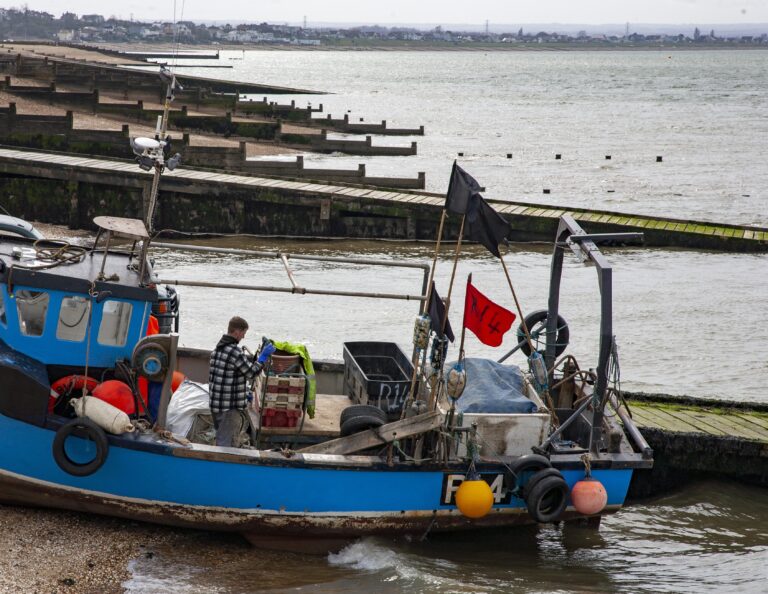
Life as a fisherman in England is a source of deep pride and enjoyment, but also stress, show the results of a major new survey conducted by the Countryside and Community Research Institute (CCRI) for Defra.
Most respondents to the survey, conducted with Howell Marine Consulting and the fishermen-led charity Fishing into the Future (FiTF), enjoyed their jobs but reported frequent feelings of stress from fisheries rules, regulations and administration, and a squeeze for space from other marine users.
The results are recently published by Defra: https://sciencesearch.defra.gov.uk/ProjectDetails?ProjectId=21923
The Fishing Industry Social Survey (FISS)
435 fishermen completed the Fishing Industry Social Survey (FISS) in early 2025.
The aim of the FISS, which was co-designed with fishing industry representatives and fishermen, is to gather information about fishermen’s everyday lives, working conditions, and views in England to inform policy under the Fisheries Act 2020. It is the first national, statistically robust, open-access (anonymous) dataset to do so.
Pride and pressures
Fishing is deeply rooted in identity and independence. Nearly all (94%) of respondents said they are motivated to fish because it is ‘a way of life’. 79% are ‘satisfied’ or ‘very satisfied’ with the enjoyment they get from their work, with ‘being your own boss’ a strong part of the appeal.
However, economic and regulatory pressures weigh heavily on their minds.
Over 85% reported stress from fisheries rules, regulations and administration. Just over half (56%) said they were unhappy with the long-term economic viability of fishing.
Nearly 70% of fishermen surveyed (primarily skippers) are aged over 50, and only 9% are under 35. This mirrors wider trends across England’s fishing fleet, and points to a potential succession challenge. Already, 63% of respondents cited a lack of crew as a source of stress.
Most (82%) had either heard of Fisheries Management Plans (FMPs) – action plans to deliver sustainable fisheries – or taken part in the FMP process. Of those who engaged with FMP processes, 65% felt their knowledge of fisheries management had improved.
Speaking to government and supporting industry
Defra plans to repeat the survey annually or biennially. They distributed the latest survey on 12th January 2026 to a selection of vessel owners to complete on an invite-only basis.
Dr Julie Urquhart (CCRI), who leads the survey, said: “Information on fishermen’s everyday lives is critical to informing government policies on fisheries management.
“We’re delighted that the FISS can provide this essential information to complement other survey data on the economic performance and composition of England’s fishing fleet and support Defra’s decisions, the fishing industry and the marine environment.”
Skipper David Stevens said: “It was good to be able to give our input into shaping what is a very important survey. Going forward, we as an industry will be able to give our views in response to questions we have designed, with fisheries management accountable to the outcomes of the survey.”
Mike Roach, chief executive of the National Federation of Fisherman’s Organisations (NFFO) said: “The data collected in the FISS is critical to describe fisheries beyond landings statistics.
“We hope it will form part of management decisions and policies developed in the future and provide a mechanism for the voices of the fishing industry reaching policy makers”.
Further information
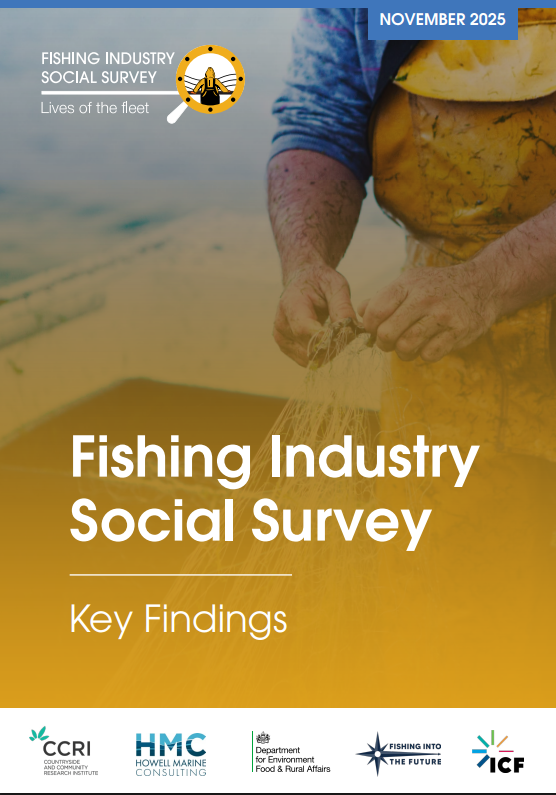
Access the results and dataset: https://sciencesearch.defra.gov.uk/ProjectDetails?
Research commissioned by: Defra
For more information, please contact: Julie Urquhart, CCRI, jurquhart1@glos.ac.uk
The CCRI FISS team