Every year, CCRI invites PhD students from across the UK to share their research at the Winter School. Here, Josh Davis explains how the Winter School has not only provided a supportive, constructive space to discuss his PhD, but also a setting to explore how knowledge is created, challenged, and shared.
Returning to the Countryside and Community Research Institute (CCRI) Winter School at University of Gloucestershire has become something of an annual marker in my PhD journey.
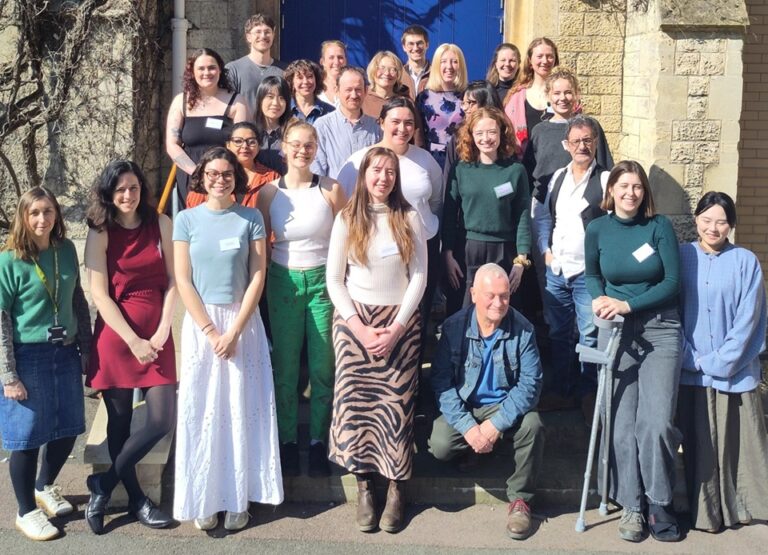
This year’s event (held 12-13 March 2026) was my fourth. The experience has come to feel less like a discrete event and more like revisiting a familiar, evolving space — one shaped by continuity as it is by change.
At its core, the Winter School has remained remarkably consistent. It offers a rare environment where PhD researchers can present work-in-progress in a supportive, conference-style setting: receiving constructive and thoughtful feedback from both peers and experienced academics.
That combination of intellectual rigour alongside genuine openness is not easily replicated. It creates a space where ideas can be tested, challenged, and reshaped without the pressure of needing to present something “finished.”
Yet, across the four years I’ve attended, what has shifted is the nature of the conversations themselves.
From knowledge transfer to knowledge co-production
Earlier iterations of the Winter School often leaned more heavily towards questions of method and application: how to design research, how to generate robust evidence, how to contribute to ongoing policy and practice debates. These remain important. But more recent themes — from “climates of change” to “strengthening rural–urban linkages,” and this year’s focus on “embracing creativity in social and environmental research” — signal a broader shift.
There is a growing recognition that the challenges we face are not only technical, but deeply systemic, relational, and uncertain.
This is reflected in how research is discussed at the Winter School. There is less emphasis on knowledge as something transferred, and more on knowledge as something co-produced. Less focus is placed on individual expertise, and more on collaboration, networks, and learning across boundaries. And, perhaps, most strikingly, I’ve seen a growing comfort with uncertainty and recognition that research is not always about providing clear answers, but about asking better questions.
This year’s focus on creativity brought these dynamics into sharper relief. Framed not as an abstract or artistic add-on, but as something embedded within the research process itself: in how we engage with participants, interpret complex systems, and navigate the inevitable tensions that arise in social and environmental research.
The accompanying workshops and reflective sessions add another layer to this, offering practical insight into how different approaches — from visual methods to participatory techniques — open new ways of thinking. Perhaps more importantly, they reinforce a broader point: that creativity is not just about method, but about mindset.
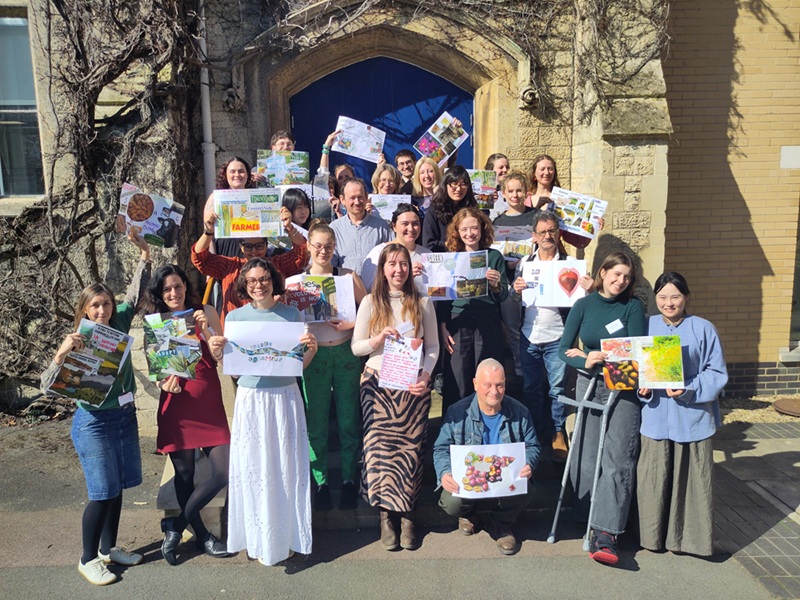
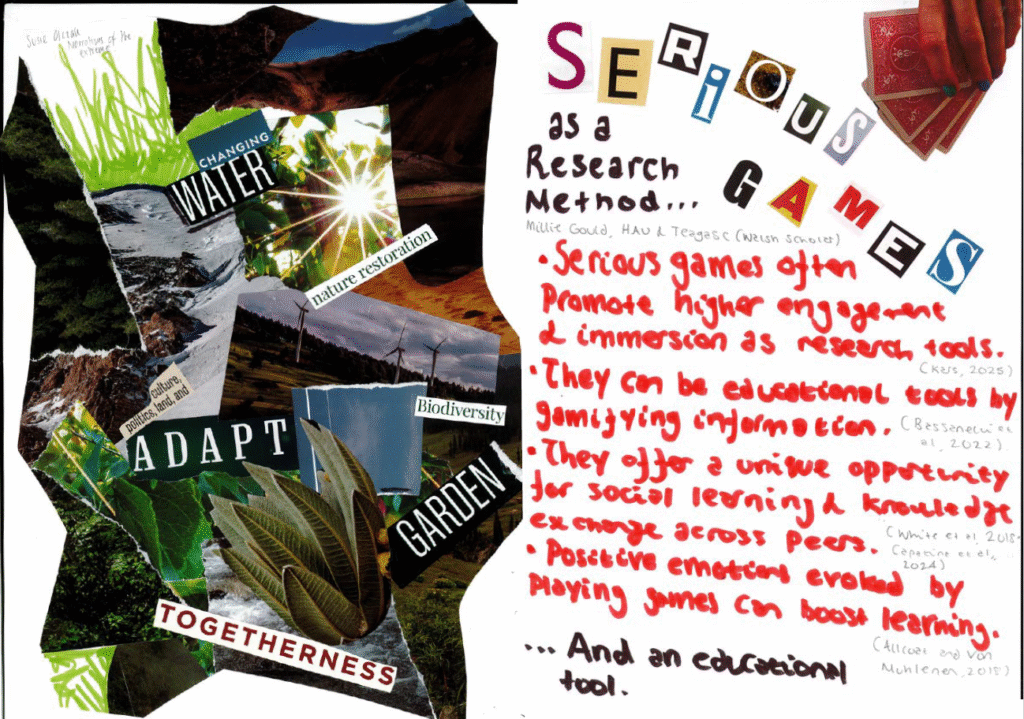
Attendees at the 2026 Winter School were invited to create a zine based on their research. All zines from the event can be viewed here.
Reflecting on my research journey – and the nature of research itself
For me, attending the Winter School over multiple years has also provided a space to reflect on my own development as a researcher.
Early on in my PhD, I found myself looking for clarity — for the “right” framework, the “best” method, the most convincing argument. Returning now, there is a greater appreciation for the value of ambiguity, iteration, and reflexivity.
Research feels less like a process of arriving at answers, and more like an ongoing negotiation (i.e., between theory and practice, between different forms of knowledge, and between competing ways of understanding the world).
In that sense, the Winter School mirrors many of the dynamics we see in the systems we study. It is not static. It evolves through the contributions of those who take part, shaped by shifting priorities, emerging ideas, and the collective energy of the group.
Spaces like this matter. They provide more than just an opportunity to present work; they offer a setting in which researchers can experiment, reflect, and connect. At a time when social and environmental challenges demand new ways of thinking and working, these kinds of intellectual and collaborative environments are essential.

About the author
Josh Davis is a PhD researcher at CCRI investigating the shifts in knowledge and skills required to deliver landscape-scale nature-based recovery.
About the Winter School
The University of Gloucestershire’s Countryside and Community Research Institute (CCRI) annual Winter School provides an opportunity for current PhD researchers at UK institutions to present work-in-progress to a group of peers and experienced CCRI academics in a conference style setting. It is built upon a tradition of providing a friendly and encouraging space in which to share ideas.
Follow us for details of next year’s school!

Stay connected. Sign up to the CCRI newsletter.