
Today (9 July 2026), CCRI’s Director Matt Reed delivers his inaugural lecture as Professor of Climate Citizenships at University of Gloucestershire.
Marking the occasion, he reflects on a career in sustainability research and his own personal experiences of living through rural decline. Drawing on these insights, he makes the case for a more hopeful vision of climate action — one grounded in practical solutions, community participation and the recognition that positive change is already happening around us.
About the author
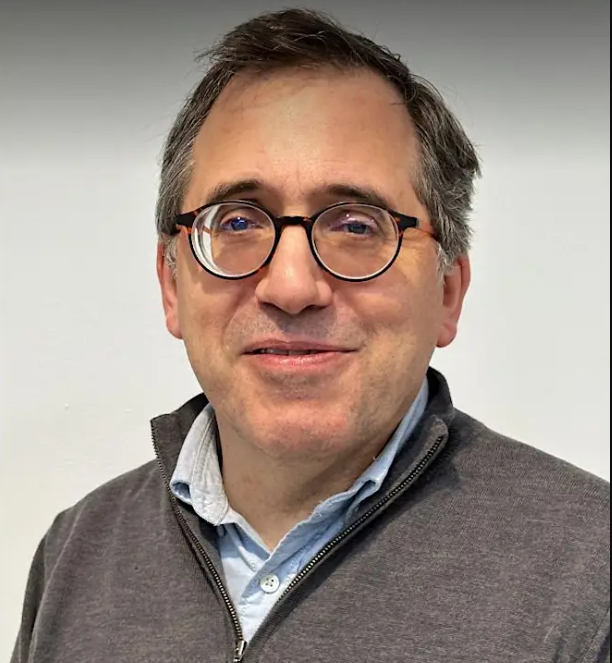
Matt Reed is a sociologist, Director of the CCRI and Head of Research for University of Gloucestershire. In 2025, he was awarded his Professorship focusing on emerging climate citizenships.
His research considers the interfaces of technology and the environment.
Today I have the huge privilege of being able to give my inaugural lecture as a professor. Part of that privilege is I get to reflect on a career in research but also a chance to point to a few ways we could progress forward.
The other part of the privilege is that I get to mention something of my life and circumstances in relation to my research. Most of the time as academics, we are very careful to make sure that we are absent from our research (unless we specifically say otherwise), and most statements are carefully framed and caveated to express our levels of certainty about the evidence. As professionals, what brought us to this place is rightly excluded.
For my lecture, I want to reintroduce the importance of bringing people back into the discussion of climate change and the associated arguments. All too often, they are absent. My thoughts are confined to those who broadly accept the arguments about climate change. I’m not interested in those who are in favour of foot-dragging or denialism, in part because it is unproductive and also that it distracts from more pressing questions.
Avoiding dire consequences
“The arguments for a transition to a de-carbonised society often follow the same patterns and indeed rhetoric, and then its proponents are surprised that many of our fellow citizens are somewhat sceptical and reluctant to join in.”
My contention is that most adults have lived through several technological and social transitions, about which they have rarely been consulted or been allowed to meaningfully participate.
Told that there is no alternative, or that some form of Armageddon will be realised unless they go along with these changes.
The consequences for individuals, their families, and communities have often been dire. The arguments for a transition to a de-carbonised society often follow the same patterns and indeed rhetoric, and then its proponents are surprised that many of our fellow citizens are somewhat sceptical and reluctant to join in.
If we turn to some examples of environmental change and innovation, we can see models that are better than this (I will come to these), but we need to be attentive to the problems of our own aims.
Personal experiences
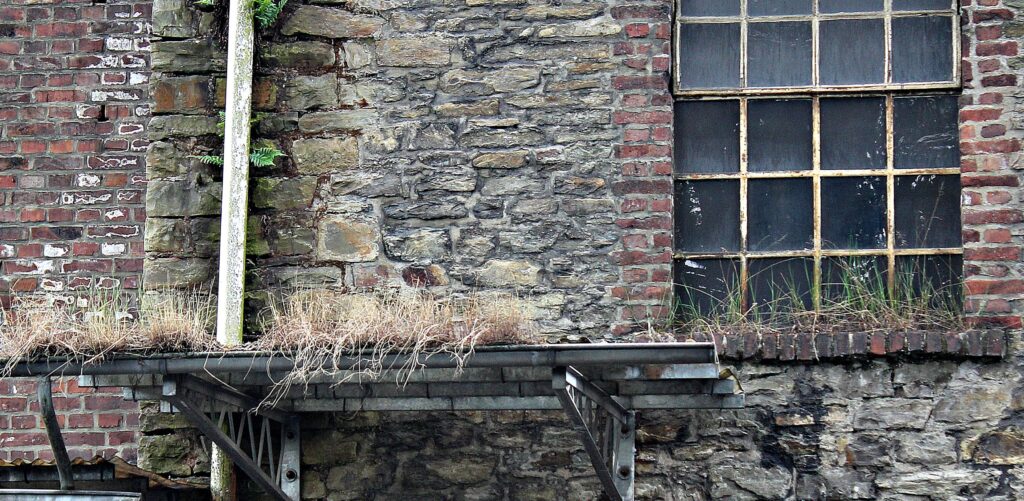
My own family’s experience of one of these transitions was that our world was changed to the point that we seemingly did not exist. I come from a family of rural engineers, in a community that has been for several hundred years innovating and making machines – including the first powered flying machine.
During the 1980s, the factories were closed and replaced by food manufacturing; the fact that there were rural industrial communities was eclipsed by the rural being in a binary between agriculture and leisure/tourism, a simplification that has led to a great deal of damage to many rural communities, and it was all done in the name of the market society.
We became a more remote community as public transport was cut and, in the case of the railways, abandoned altogether; spatially, the distances remained the same, but socially, we were distanced and connected only by private cars and trucks. My family had a rocky time during that decade, our community altered and our role was written out of the story.
Now, when a group comes with an abstract argument about the need for a change, backed by science or necessity, I raise an eyebrow to say the least.
Most adults have had a similar experience. A contemporary example is that we have given our children smartphones as devices of communication only to find that corporations are playing games with their developing minds, piping to them filth and horror alongside humour and community.
Arguments for a more climate-friendly society need to compete with and honour those lived experiences, not batter us with stories of disaster.
Drawing the right lessons from history
“For the past 100 years, the cultural movement that is sustainable agriculture has been busy building an alternative and, in doing so, has addressed many of the arguments and problems faced in the current discussion about an ecological transition.”
The irony is that in the history of environmental thinking, all of this has been rehearsed before. Most of those making pro-nature arguments are unaware of this history and have often unwittingly drawn the wrong lessons from what they have inherited.
For the past 100 years, the cultural movement that is sustainable agriculture has been busy building an alternative and, in doing so, has addressed many of the arguments and problems faced in the current discussion about an ecological transition. Through a bottom-up process of experimentation and debate, they have developed, from rural areas, innovative practices that work and are deeply pragmatic, which address the needs of people, animals, and nature.
This movement has changed how we think about food and farming. If you live in the UK, they have played a part in ensuring that antibiotics are not so routinely used in agriculture, pesticides and herbicides are controlled, that feedlots are not present, that GM plants are part of the food chain, and big questions are being asked about ultra-processed food. The alternative they have created is available now, works, is delicious, and can be scaled.
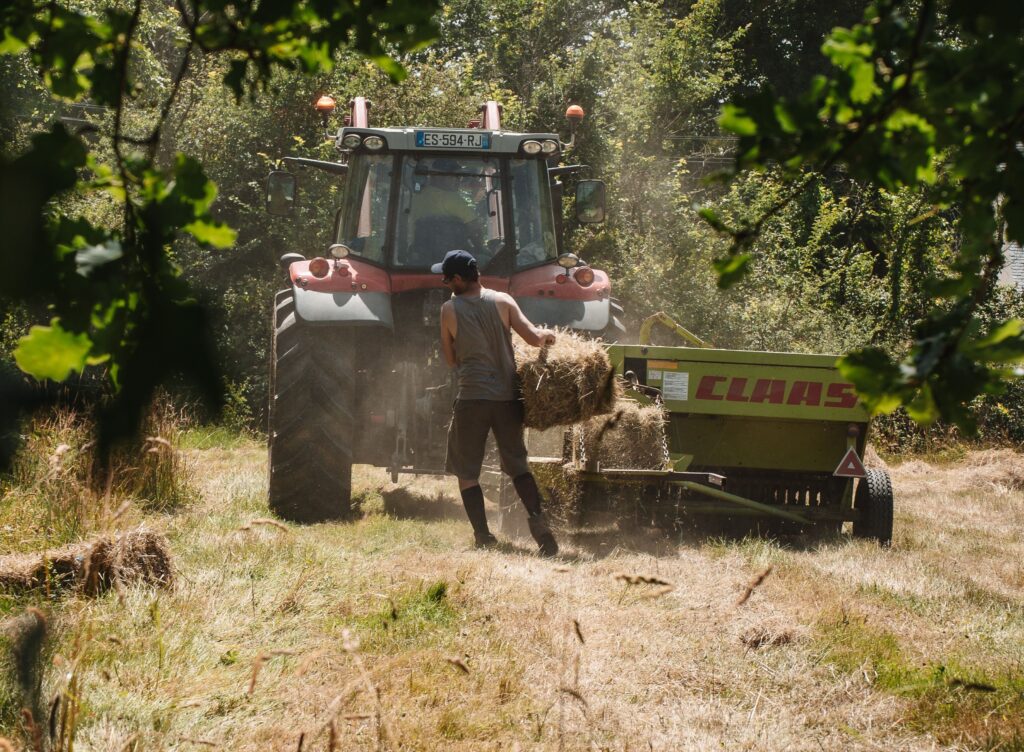
The turning point was in the early 1970s when there was an amazing confluence of thinkers around the Soil Association, the leading body of the organic food and farming movement.
Three significant thinkers about the environment—Barry Commoner, Fritz Schumacher, and Teddy Goldsmith—were in dialogue and together influencing how we think and debate our future. The rhetoric of Teddy Goldsmith, of a planet breaking its life support system, became particularly influential and widespread, whilst Fritz Schumacher argued that only through human flourishing would environmental concerns be addressed.
We are at a moment of change
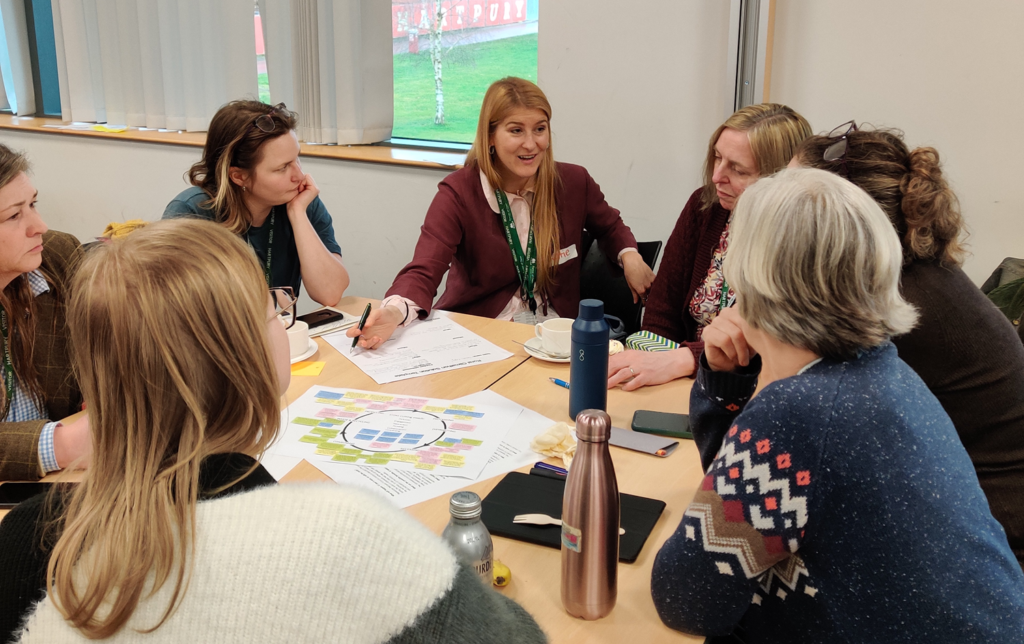
Our news abounds with stories of the morbid symptoms of a world that is undergoing profound disruption, and it is easy to become despairing, and sometimes in those arguments think that we cannot find the energy and determination to make positive changes.
I would argue that there is plenty of evidence to be more positive, and to reassure ourselves and our fellow citizens that we have practical solutions at hand, which will lead quickly to better outcomes for all of us. Equally importantly, they can be part of that change, they can shape it and do so in dialogue with others.
Collectively, we have all the tools we need.
If we look around us, we can see the shoots of that change in our neighbourhoods and communities, in the decisions we can make every day.
I’ll be talking about all of that and that plus a few examples from my research at the lecture to illustrate these points. I look forward to seeing many of you there.