On World Soil Day 2025 [5 December], we spotlight CCRI’s four EU research projects dedicated to improving soil health. Addressing plastic contamination, erosion, desertification and farmland degradation, these projects aim to secure a better future for both soil and society.
The soil beneath your feet is in a lot of trouble. And that means we’re in trouble too.
After thousands of years of human mismanagement, around two thirds – 60-70% – of soils in Europe are unhealthy. This figure rises to 89% on agricultural soils.
Soils are increasingly contaminated, eroded, nutrient-poor, water-deprived, compacted (i.e. too hard), and covered with concrete.
And when soil suffers, it is less able to:
- Grow our food
- Protect us from floods and the effects of drought
- Purify water
- Store carbon and fight climate change
- Provide homes for nature
- Shape the landscapes we cherish
A turning point for soil
Our unsustainable management of soil over the centuries – things like deforestation, intensive agriculture and urban development – has been done to support our societies and economies.
But we have now reached a point where things are so bad, we must reconsider how we produce our food, source materials and develop land in ways that minimise, or even reverse, damage to soil.
CCRI is proud to be part of four major EU research projects that generate knowledge to enable policymakers, farmers, and land managers to drive this critical transformation.
Our social scientists and research communicators work with natural scientists, farmers, economists and other experts to ensure that everyone’s insights on how to look after soil are heard and shared widely.
By combining diverse perspectives and experiences with scientific evidence, we help shape policies and practices that benefit both soil and society.
Read on to learn how CCRI is connecting people with soil for stronger soil management.
Four CCRI soil health research projects
- EUROSION
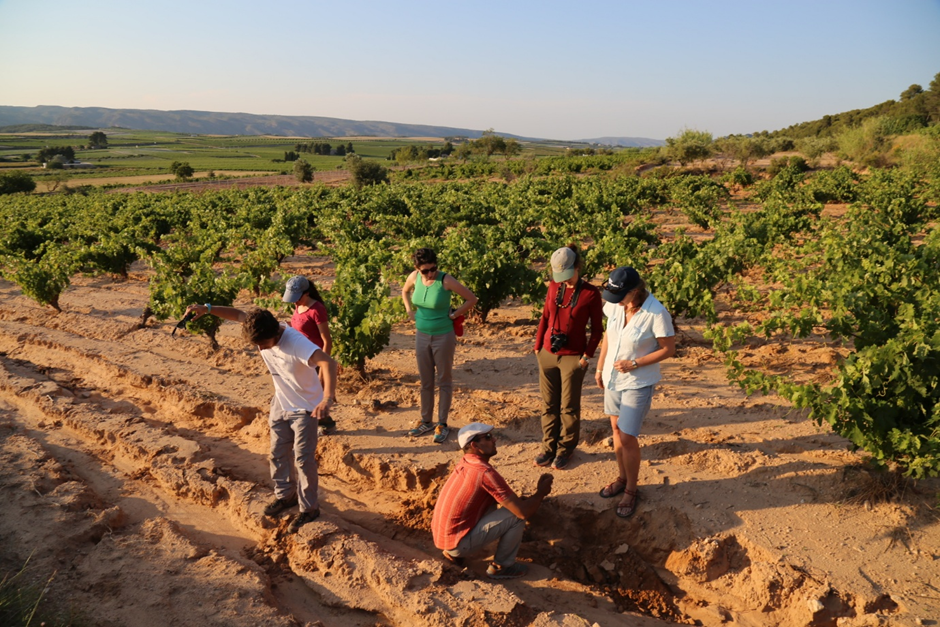
Image credit: Artemi Cerdà (distributed via imaggeo.egu.eu)
Goal: develop a dynamic monitoring system to accurately assess and prevent soil erosion on farmland across Europe
When: 2025-2030
About: The EU loses an estimated 1 billion tonnes of soil every year to erosion.
EUROSION will develop a monitoring system that collects up–to-date and reliable data on soil erosion across Europe. This will lead to a new platform that creates dynamic maps of erosion to guide policies and practices on how best to manage soil, as well as future research.
CCRI’s role:
- Initiation of a soil erosion monitoring network: this involves a vast range of people with links to soil, including land managers, foresters, industry, policymakers, researchers and consumers.
- Citizen science coordination: Co-design a protocol for citizen science monitoring across the EU, and help put it into action.
CCRI team: Charlotte Chivers, Jane Mills, Fern Baker
Learn more: https://cordis.europa.eu/project/id/101218843
Stay tuned for a project website in 2026!
2. MINAGRIS
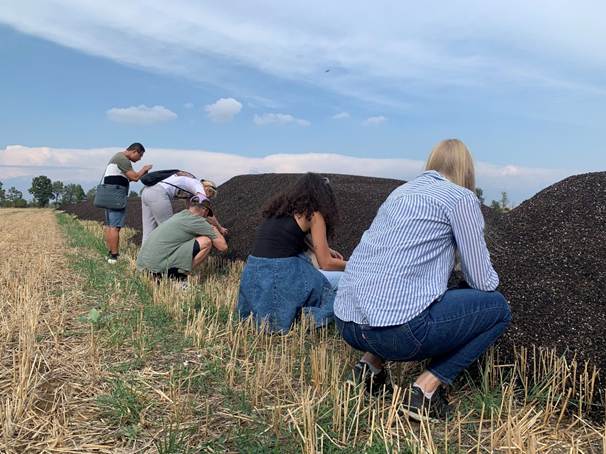
Goal: Assess the impacts of micro- and nano-plastics in agricultural soils on biodiversity, plant productivity and ecosystem services and their transport and degradation in the environment.
When: 2021-2026
About: Plastic use in agriculture leads to soil contamination with micro- and nano-plastics from various sources, including contaminated fertilisers.
MINAGRIS investigates how this plastic debris affects biodiversity, ecosystem services, crop yields, and socio-economic outcomes for farms.
CCRI’s role:
- Case study site management: Managing and sampling the project’s UK research sites in Nottinghamshire and south-west England.
- Dissemination and communication: Engaging and communicating with a wide range of people (including researchers, regulators, advisors, policymakers, farmers), ensuring the project outputs are widely shared and used.
CCRI team: Charlotte Chivers, Julie Ingram, Deborah Talbot
Learn more: minagris.eu
3. TERRASAFE
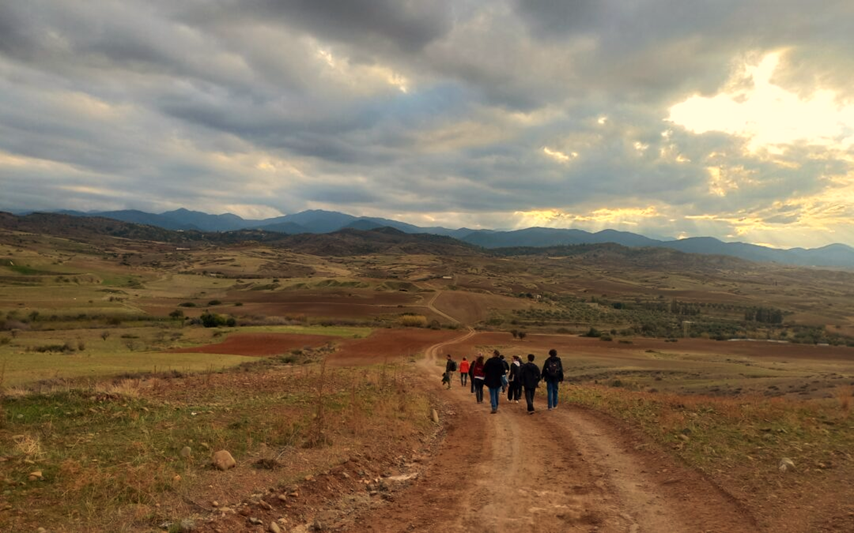
Goal: Assess innovations for empowering communities to combat desertification
When: 2024-2029
About: The threat of desertification is accelerating in Europe owing to climate change and unsustainable land management.
TERRASAFE works closely with community members, including landowners and local authorities, in five vulnerable regions of southern Europe and north Africa. Together, we’re testing different solutions to desertification to discover what works best for the communities.
CCRI’s role:
- Cross-project collaboration: Ensuring the project engages effectively with other desertification and land-degradation research projects, initiatives and networks.
- Dissemination and communication: Engaging and communicating with a wide range of people (including researchers, policymakers, farmers), ensuring the project outputs are widely shared and used.
CCRI team: Jane Mills, Charlotte Chivers, Deborah Talbot
Learn more: terrasafe.eu
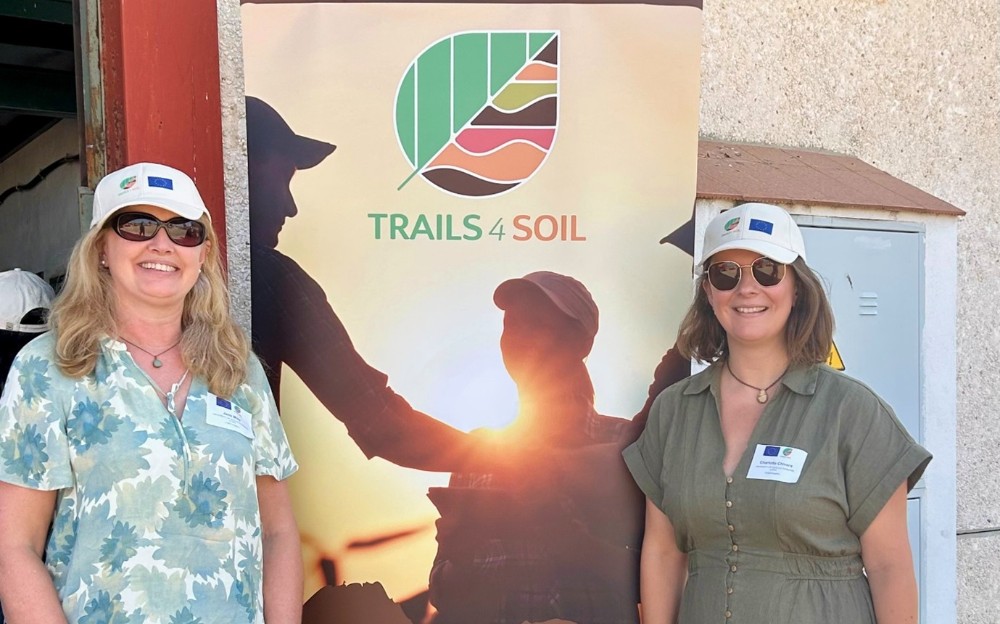
4. TRAILS4SOIL
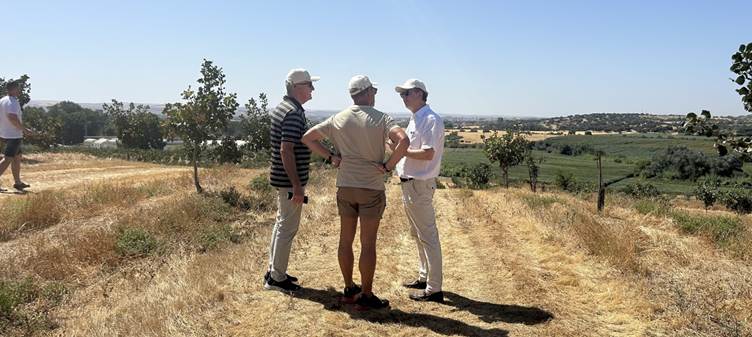
Goal: Rebuild soil health through regenerative and conservation agriculture
When: 2025-2030
About: The deteriorating state of Europe’s agricultural soils threatens crop yield, farm income, and biodiversity alike.
TRAILS4SOIL works closely with farmers, land managers and other stakeholders across a European network of 100 experimentation sites on working farms. Together, we’re exploring how regenerative and conservation farming techniques could help restore soil health and secure the long-term sustainability of European farming.
CCRI’s role:
- Stakeholder mapping and engagement: identifying critical audiences for project partners to engage with and ensuring that the project draws on their expertise and perspectives for more socially relevant findings.
- Dissemination and communication: Engaging and communicating with a wide range of people (including researchers, policymakers, farmers), ensuring the project outputs are widely shared and used.
- Setting up ‘Living Labs’: supporting governance, protocols and guidelines for the project’s 5 Living Labs – each is a set of experimentation sites on farms, where we work with farmers to address real needs.
CCRI team: Jane Mills, Charlotte Chivers, Michelle Kilfoyle
Learn more: trails4soil.eu
Mission Soil
As Mission Soil projects, these activities fulfil important goals for the EU.
Specifically, they collectively support 5 Mission Soil objectives:
- Reduce land degradation relating to desertification;
- Reduce soil pollution and enhance restoration;
- Prevent erosion;
- Reduce the EU global footprint on soils;
- Increase soil literacy across the EU (and in the UK).
Learn about Mission Soil: https://mission-soil-platform.ec.europa.eu/about/mission-soil