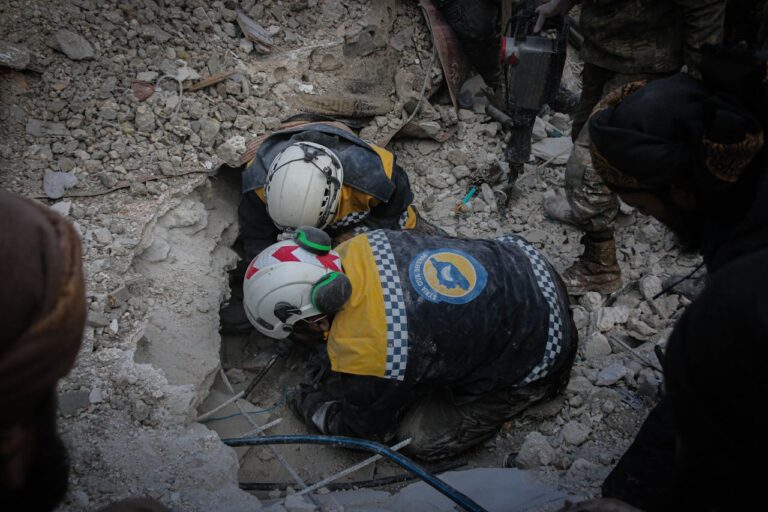
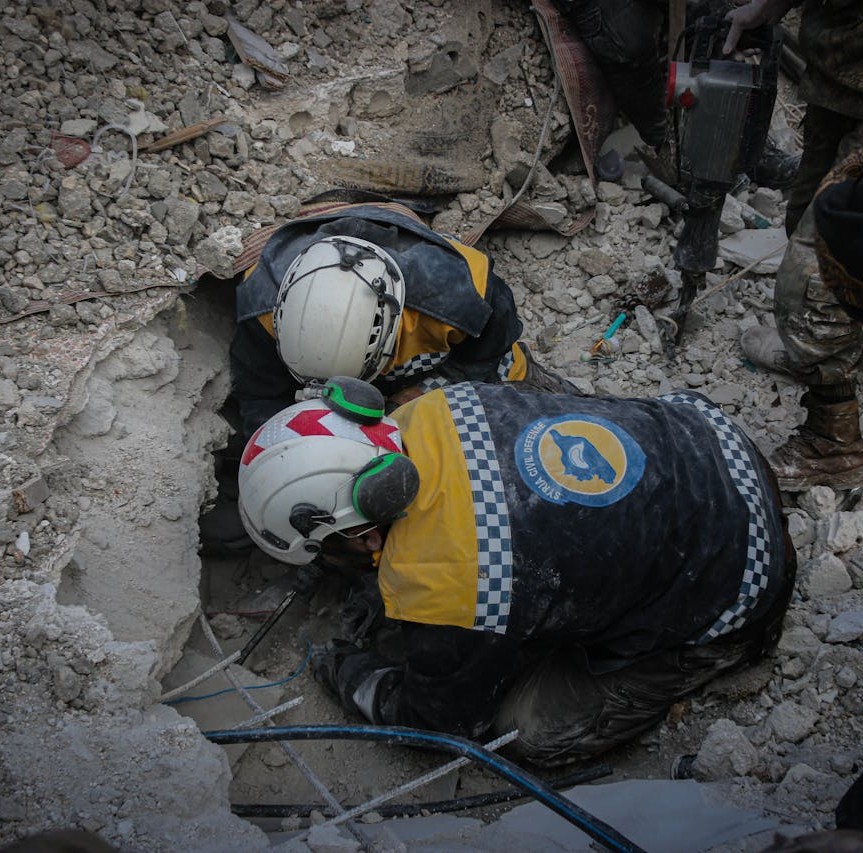
Conflict, displacement and social fragmentation continue to shape many parts of the world. What helps the people working in these fragile settings stay calm, ethical and effective? In this post, Dilshaad Bundhoo and Kenny Lynch explore the, largely undocumented, skills that practitioners rely on in their high-pressure, high-stakes roles, and how they are setting out to uncover this hidden knowledge.
In conflict-affected and high-pressure environments, professionals are often expected to make difficult decisions under intense emotional, ethical, and practical pressure.
A humanitarian worker negotiating access to a community after a violent incident. A researcher trying to build trust in an environment shaped by suspicion. A peacebuilding practitioner facilitating dialogue between groups carrying years of trauma and grievance.
In these situations, technical expertise alone is rarely enough.
The challenge is not simply what to do. It is how to remain calm enough, aware enough, and grounded enough to make good judgements when relationships are fragile, uncertainty is high, and every interaction carries consequences.
Yet despite growing discussion around “resilience,” “best practice,” and “capacity building” in the sector, much of the practical knowledge professionals rely on in these environments remains informal and rarely documented.
This is the starting point of our new project, GROUNDED, at University of Gloucestershire.
We will ask a focused but important question:
What actually helps practitioners remain effective, ethical, and psychologically grounded when working in fragile and emotionally demanding settings?
Beyond “best practice”
Many professional frameworks for practitioners working in conflict and crisis settings rightly emphasise ethics, safeguarding, dialogue, and accountability. These are essential.
But these people often face situations where formal guidance alone cannot fully prepare them for the realities of practice.
A humanitarian worker threatened at a checkpoint may have to balance operational objectives, personal safety, community trust, and the principle of “Do No Harm” simultaneously.
A field researcher may need to decide whether continuing an interview risks placing emotional strain on a participant or whether withdrawing could damage trust and relationships already built over months.
In these moments, people are not simply applying protocols mechanically. They are making situated judgements under pressure. This requires more than technical competence. It requires situational awareness, emotional regulation, relational sensitivity, and the ability to think clearly while navigating uncertainty.
These dimensions of practice are often discussed informally between experienced practitioners but remain underexplored in research and professional development frameworks.

The hidden knowledge of practice
One of the central ideas behind GROUNDED is that practitioners develop forms of knowledge that are deeply practical, relational, and experience-based.
This knowledge is rarely found in manuals. Instead, it develops through repeated exposure to difficult situations, reflection on mistakes, and learning how to read complex human dynamics in context.
For example, experienced practitioners often describe learning:
- when to speak and when silence is more productive;
- how to recognise rising tension before conflict escalates;
- how their own emotional state shapes interactions with others;
- how fatigue, stress, or fear affect judgement;
- and how trust is built — or damaged — through small relational signals.
These are not abstract issues. They directly affect the quality, ethics, and effectiveness of work carried out in fragile settings.
They also affect the wellbeing and sustainability of the people doing this work.
Why this matters now
The need to better understand these pressures is becoming increasingly urgent.
Professionals working in conflict and crisis settings are operating within a context of growing geopolitical instability, increasing displacement, humanitarian funding pressures, and rising violence against aid workers and local partners.
Data from the Aid Worker Security Database shows continuing high levels of violence against humanitarian personnel globally, including killings, kidnappings, assaults, and attacks on health and relief infrastructure. Every year, an average of 340 aid workers are killed while carrying out their work, 131 are kidnapped and 250 are wounded
But physical danger is only part of the picture.
Many practitioners also work under conditions of prolonged emotional strain, moral pressure, uncertainty, and institutional constraint. Over time, this can affect decision-making, relationships, wellbeing, and the sustainability of professional engagement itself.
Despite this, there is still relatively limited space within professional systems to discuss the lived realities of navigating these pressures in practice.
Learning directly from practitioners
The GROUNDED project aims to contribute to this conversation by learning directly from people with experience working in fragile and emotionally demanding environments.
We are currently inviting practitioners across fields including humanitarian response, peacebuilding, development, field-based research, community engagement, and conflict-related work to take part in a short survey.
Rather than focusing on abstract theory, the survey explores:
- what pressures practitioners actually encounter in practice;
- how people make sense of difficult or tense situations;
- what helps sustain effective and ethical work over time;
- and how professionals manage the emotional and relational demands of this work.
The aim is not to produce a rigid model telling people how they should respond in every situation. Fragile settings are dynamic, and no two contexts are identical.
Instead, the project seeks to identify recurring patterns, pressures, and forms of preparedness that may help practitioners navigate complexity more consciously and sustainably.
Looking forward
As conflict, displacement, and social fragmentation continue to shape many parts of the world, understanding how professionals sustain effective practice under pressure is becoming increasingly important — not only for individual wellbeing, but also for the resilience and legitimacy of the institutions and interventions operating in these contexts.
There is growing recognition across research and policy communities that technical solutions alone are insufficient in environments shaped by distrust, fear, trauma, and uncertainty.
The human dimensions of practice matter.
Understanding how people remain grounded, relationally aware, and ethically responsive under pressure may therefore become an increasingly important part of strengthening work in fragile settings.
If your work involves navigating uncertainty, tension, emotionally demanding situations, or complex human dynamics, we would encourage you to complete our survey. Your experience could make an important contribution to this research.
Take part in the survey
https://app.onlinesurveys.jisc.ac.uk/s/glos/grounded-survey
Participation is anonymous, and the survey takes approximately 10–15 minutes to complete.
Participants who wish to remain involved will also have opportunities to contribute to follow-up conversations and a Delphi process exploring emerging findings and future directions for the project.
About the authors

Dilshaad Bundhoo is a Research Fellow at the Countryside & Community Research Institute (CCRI). She specialises in understanding socio-cognitive dynamics which facilitates constructive social and interpersonal exchanges. Her doctoral thesis, an immersive four-year research project in Israel and the West Bank, focused on workplace interpersonal resilience.
Kenny Lynch is Professor of Development and Community in the School of Arts, Culture and Environment. His research interests are in the links between the cities and the countryside in developing world countries, particularly sub-Saharan Africa.

Stay connected. Sign up to the CCRI newsletter.