Everyone depends heavily on the countryside for survival and wellbeing, no matter where they live. Charlotte Chivers makes the case for recognising the countryside as national infrastructure and asks: why is investment in it still seen as discretionary?

About the author
Charlotte Chivers is a Research Fellow with the CCRI.
Her research interests relate to co-design, participatory methods, soil health, water quality, landscape-scale nature recovery, agri-environmental policy, and science communication.
Something I’ve never understood is why the countryside is often treated as a ‘nice to have’, when, actually, it holds life together for everyone across the land, and whether they live in a sprawling city or on a remote hillside.
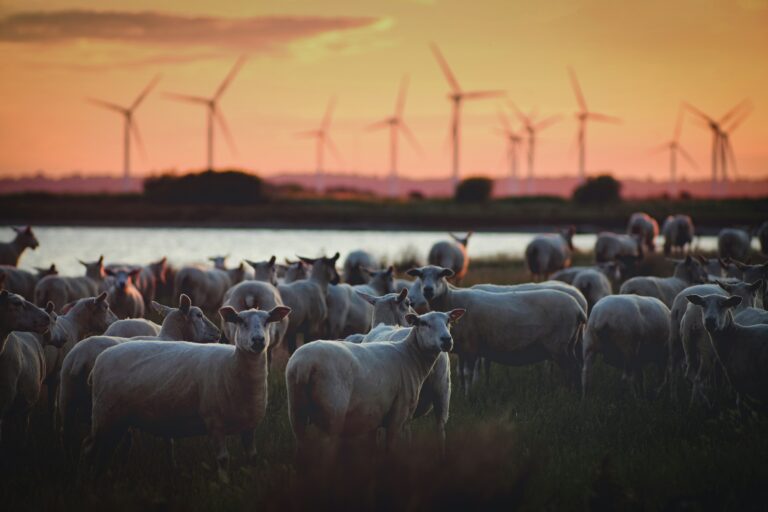
We all need the countryside for food, clean water, energy, national security, nature and climate resilience. It is essential to health and wellbeing and, for many of us, tourism, housing, community and much more.
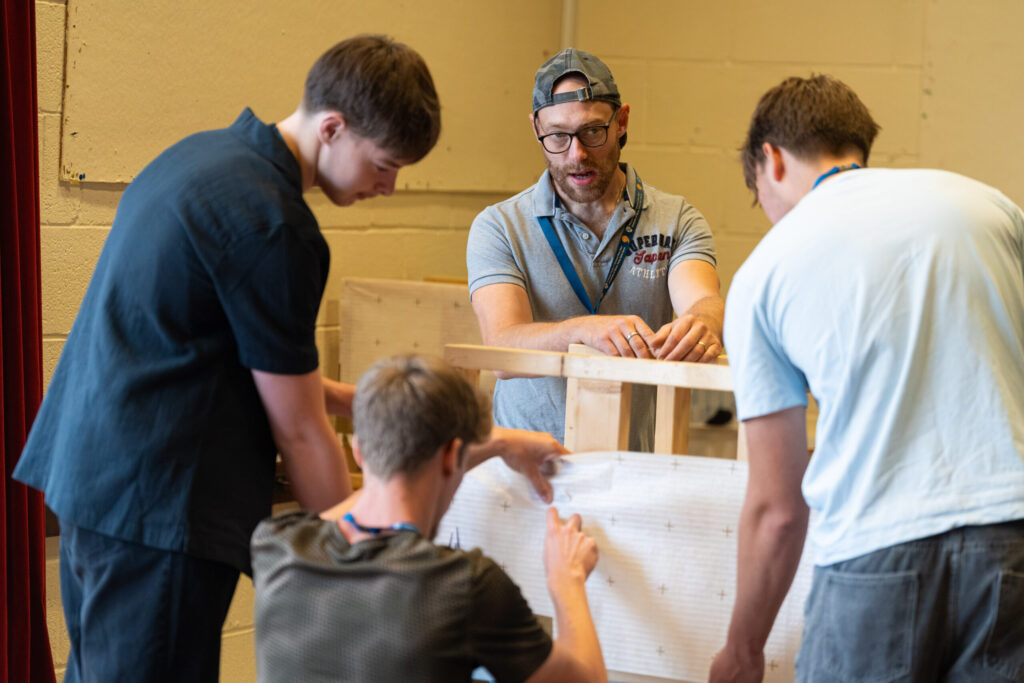
Last month, I attended the Future Countryside event at the beautiful Raby Castle. It was a thoughtful and, at times, provocative day, and of particular relevance to my recent research on governance for protected landscapes. Farmers, land managers, business leaders, environmentalists and policymakers came together to discuss the future of rural places, land use, planning, nature, farming, regulation and political voice.
One comment that has stayed firmly with me since was the suggestion, made at different points during the day, that there is simply no more money for the countryside, in part because the country is ‘bust’.
This was said even though almost every discussion identified a clear need to protect and invest in the countryside, not only for nature, but for all the essential things it does for society: food and water supply, and so on.
The UK government will be prioritising defence, education and health in coming years. So how is it that there is ‘no more’ money for the countryside, when supporting it directly supports all three of these areas?
Defence and national security depend on functioning ecosystems, stable food systems, secure water supplies and resilient landscapes. The government’s recent Nature Security Assessment makes this very clear: biodiversity loss and ecosystem collapse are not just environmental issues, but risks to UK resilience, prosperity and security.
Education depends on young people understanding the landscapes, food systems and environmental pressures that will shape their futures. Health depends on access to nature, clean air and water, good food, meaningful places and the wellbeing benefits that rural and green spaces provide.
The countryside matters to people
“The countryside really matters to people, but somehow this does not translate into the policy agenda.”
I struggle with the idea of the countryside being treated as peripheral to the “real” priorities. In many ways, it underpins them, just like urban spaces do in other ways.
It’s clear we need to work collectively to improve understanding of what the countryside represents and offers. Michael Gove, when he was Defra Secretary, reportedly said that “choice does not sing in tune” when it comes to the countryside. That has to change, and urgently, especially when we are facing the possibility of ecosystem collapse within the coming decades.
Lord Barnard, speaking at Future Countryside, recognised the gulf between rural and urban communities, which matters because it shapes how the countryside is understood, valued and represented politically.
The journalist Simon Jenkins made a similar point at the event. The countryside really matters to people, but somehow this does not translate into the policy agenda. He argued that things became particularly problematic around the turn of the century, with rural planning control transferring to urban centres and under increasing pressure from construction interests.
Craig Bennett, Chief Executive of The Wildlife Trusts, further made the point that our economy, lives and livelihoods depend on nature. Yet politics still too often treats it as a “nice to have”.
Questioning what we value
The recent debate around the HS2 bat tunnel is a case in point, particularly the misinformation surrounding it. Mitigation for bats did not need to cost nearly as much as it did (a reported £100m). This overspend should be understood more as a failure of HS2’s management and delivery and not as evidence that paying for nature protection itself is the problem.
But such debates raise a wider question about what we value. Why can tens of millions be spent on a roundabout without much concern, while investment in nature recovery is treated as excessive?
And why can £1.3 billion be committed to supporting the new Universal theme park in Bedfordshire, while serious investment in a healthy countryside, which could support better tourism, food, water, health, nature and communities, is still treated as optional?
‘Nature’ is often seen as too abstract, a point made by Natalie Prosser from the Office for Environmental Protection. But there is no economy without nature, and the countryside is still not being treated as core infrastructure.
It is valued emotionally, culturally and intrinsically by many people, but policy systems often only seem to respond when something can be translated into economic or infrastructural terms. That is a problem. GDP tells us very little about what makes life worth living. It does not capture place, belonging, ecological health, landscape character, clean water, or the quality of the communities we are building.
Regulatory burdens and shared benefits
“If the countryside is asked to host infrastructure for national goals, then rural places and communities need to see fair, long-term benefits.“
Another key concern is that the people who do the most for nature and the countryside can often end up being regulated the most. Those doing very little, on the other hand, are left largely alone.
Land managers who engage most actively in environmental schemes or manage protected sites can face additional monitoring, record-keeping and consent requirements, while those undertaking little voluntary environmental action may attract comparatively limited scrutiny.
The contrast is particularly clear for protected land. Owners and occupiers of Sites of Special Scientific Interest must obtain Natural England’s consent before carrying out specified activities, creating additional duties for those responsible for some of England’s most environmentally important land. At the same time, over a quarter of SSSIs are affected by pressures originating beyond the protected site and outside the direct control of its manager.
That feels backwards. There is a strong case for more outcomes-based regulation and earned autonomy for land managers and systems that allow land managers to build trust in agri-environment schemes and other policies, rather than simply accumulating more bureaucracy and admin.
This must include tenant farmers too. Around two thirds (64%) of farmed land in England is not owned by those who farm it, according to the Tenant Farmers Association. Any serious discussion about the future countryside has to take this into account.
Ownership and benefit, including concerns that many renewable energy assets are owned offshore, are also important considerations. If the countryside is asked to host infrastructure for national goals, then rural places and communities need to see fair, long-term benefits.
I can see the potential of AI to help inform countryside-related matters by reducing bureaucratic loads and providing a certain amount of general, impersonal advice in the future, particularly in giving rural SMEs and land managers better access to advice, information and analysis. But the jury is still out on how this plays out in practice, and whether this will be accepted by rural society.
My warning would be that digital tools, while useful for gathering broad information, should not be treated as a substitute for properly funded advice, relationships and local knowledge.
Choose your words carefully
Chris Woodley-Stewart, former Director of the North Pennines National Landscape, made a point that really resonated with me at Future Countryside. When you talk to people about their local place, they become passionate. But when you talk only in the language of ecosystem services, people’s eyes glaze over. That feels important. We do need better metrics, better evidence and better economic models, but we also need to speak about the countryside in ways that connect with people’s lives.
The countryside needs more political clout. It also needs a more unified voice that includes farmers, land managers, rural communities, environmental organisations, planners, researchers, businesses, tenants, the younger generations who shape what comes next, and those who care deeply about the future of these places.
Not everyone will not agree on everything, and nor should we pretend otherwise. But we do need to shout much more clearly about what we do agree on: the countryside is not a luxury; nature is not a blocker.
If we truly want a resilient and thriving future, we need to stop treating the countryside as peripheral and start recognising it for what it is: core national infrastructure.