As Andy Burnham takes up the position of Prime Minister of the UK on 20 July, CCRI’s Director has joined the national debates around ‘Manchesterism’, arguing that it offers rural communities reasons to be cautiously optimistic.
Since the 1980s, commentators and analysts have frequently described England as one of the most centralised countries in Europe. Successive governments have pledged to change that, but Matt Reed, Director of CCRI, believes that Burnham’s approach has greater potential to revitalise rural areas by shifting authority, investment and decision-making closer to local communities.
“One of the main things that stands out for me from Burnham’s approach to decentralisation is that he actually acknowledges rural areas and the need for ‘good growth’ in every postcode,” said Reed.
“That is something recent governments have often failed to do. Burnham’s discussion of reindustrialisation is especially relevant to rural communities with strong industrial traditions, such as the Forest of Dean here in Gloucestershire.”
While much attention has focused on what Manchesterism means for city regions, Reed argues that one of its most important tests will be whether it genuinely benefits rural communities.
“It’s essential that devolution reaches beyond the major metropolitan areas and into the countryside for rural people to see the ‘good growth’ that the Government wants to deliver. We will have to wait and see if this actually happens.”
Quality of life
According to Reed, improved rural public transport could become an early priority under a Burnham-led government. “This is particularly important for young people getting to education, training and work.”
Perhaps more significantly, Reed highlights Burnham’s suggestion that people should enjoy an equivalent quality of life regardless of where they live, describing it as a potentially transformative principle for rural policy.
“For the first time since leaving the European Union, there could be a statutory obligation to ensure people have the same quality of life wherever they live,” he noted.
“That means rural areas would not simply be places where residents accept fewer services or opportunities, but communities entitled to the same investment and vibrancy as anywhere else.”
He argues that such a commitment could fundamentally alter how government departments assess policies affecting rural communities, marking a departure from traditional approaches, such as ‘rural proofing’ national policies.
Control of food and farming
Food and farming also feature prominently in Burnham’s vision, which treats agriculture as part of the nation’s sovereign capabilities — areas that the UK should maintain, protect and develop independently.
“This is language not commonly heard since the end of the Cold War in the early 1990s, and it is likely to be welcomed by many farming communities,” commented Reed.
He suggests the approach could create opportunities to rethink wider issues, from agricultural resilience to public health and food systems.
“While this agenda could open up new ways of thinking about food production, public health and national resilience, it will also be important to balance farming’s renewed strategic importance with environmental and climate objectives,” he said.
Taking the long view
Reed also cautions that rebuilding local government capacity after years of financial pressure will take time.
“The local state is threadbare after many years of constrained resources, and rebuilding its capacity to deliver public services will not happen overnight,” he explained.
“Infrastructure will be critical. Combined authorities will need to put in place the public transport and wider connections that enable people to access opportunities. While that will require coordination and the reallocation of resources, it could also lead to a fascinating rejuvenation of the rural state at a local level.”
Although many details of the new government’s plans remain unclear, he sees Burnham’s willingness to place rural Britain within a broader vision of economic renewal as an encouraging sign.
“At the moment, I welcome the fact that rural is a part of Manchesterism,” he said. “That in itself represents an important shift in the national conversation.”
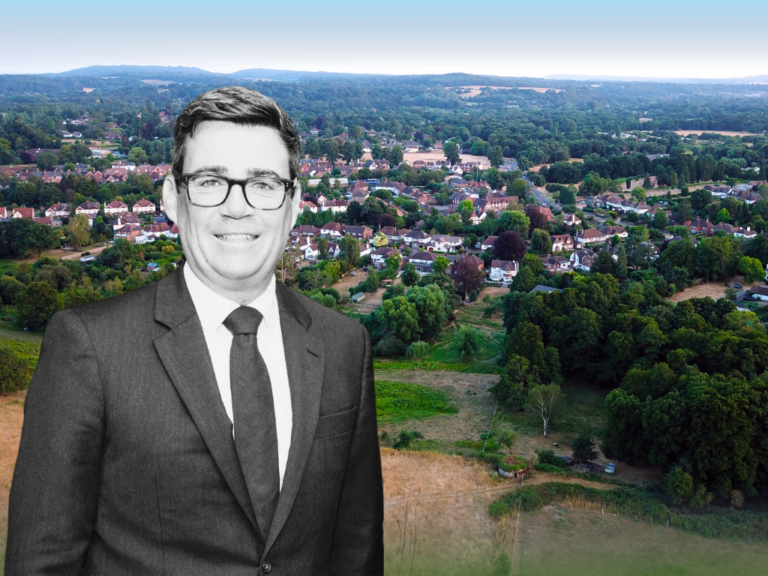
Andy Burnham image credit: Scottish Government, CC BY 2.0
Further information
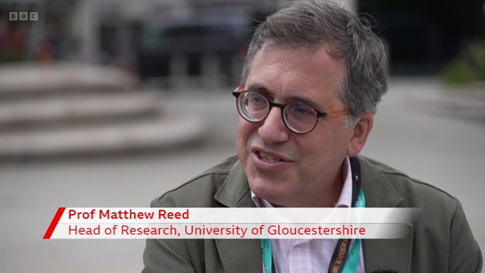
Watch Matt Reed discuss what Manchesterism could mean for the west of England on BBC Politics West (feature starts at 1.58mins).
https://www.bbc.co.uk/iplayer/episode/m002yqqw/politics-west-05072026
About Matt Reed: Matt Reed is a sociologist, Director of the CCRI and Head of Research for University of Gloucestershire. In 2025, he was awarded his Professorship focusing on emerging climate citizenships.