The Countryside and Community Research Institute (CCRI) is stepping up to address Europe’s soil erosion crisis. As a key partner in EUROSION – a newly launched £10 million (€11.5 million) EU-funded research project – we are set to build the first ever pan-European soil erosion monitoring network.
Bringing together scientists, farmers, land managers, policymakers and citizen scientists across Europe and North Africa, the EUROSION network will map where, when and why soil is being lost.
This coordinated effort will help generate practical recommendations to reduce erosion and protect one of Europe’s most essential natural resources.
We will work with members to co-design the network. Participants will contribute data erosion data and work together to develop shared methods, consistent reporting and a clear picture of erosion across landscapes, seasons and weather events.
Risks to food, farms and environment
The network’s data has never been more urgently needed. Wind, rain and intensive farming are stripping earth from our fields faster than nature can replace it.
This erosion threatens food production, harms nature and accelerates climate change. It occurs when topsoil is washed or blown away – a problem made worse by intensive tillage, deforestation and a changing climate marked by heavier storms and harsher droughts.
Across the EU, around 3.4 tonnes of soil per hectare are lost every year from farmland and natural grassland through erosion. The economic cost is estimated at £35–63 billion (€40–73 billion) annually.
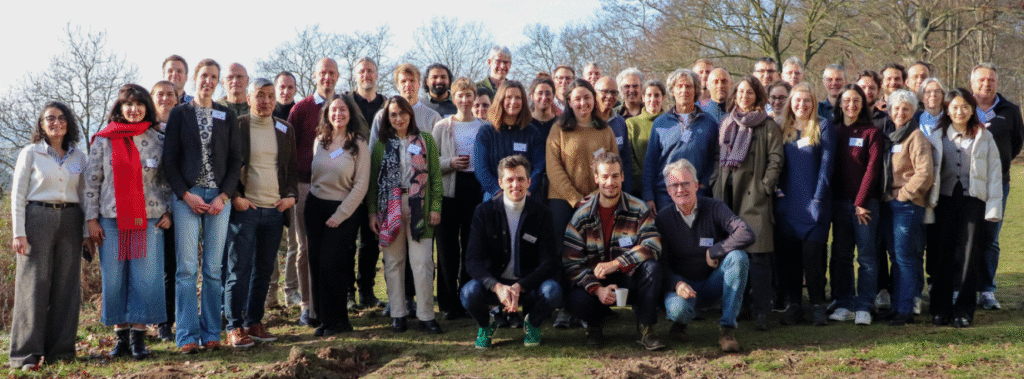
A network built to help farmers and policymakers
Over the next five years, our researchers will lead the development and operation of the new monitoring network.
Charlotte Chivers, Research Fellow at CCRI and lead for CCRI’s contribution to EUROSION, said:

“We’re excited to bring soil experts, farmers and citizens together to gather the evidence we need to understand exactly how water, wind and tillage each contribute to soil erosion, and where and when erosion is most likely to happen.
“This will guide our recommendations for farmers and policymakers on how to reduce erosion.”
Fern Baker, Research Fellow at CCRI and contributor to EUROSION, said:

“Too often we only have average estimates of erosion across large regions. By pooling the observations of people across Europe and Tunisia, we can produce much more precise information for specific locations, land types – such as steep slopes – and particular seasons or extreme events. This is crucial for developing stronger recommendations to farmers on how to limit erosion.”
Charlotte added:
“We don’t want this network to disband when the EUROSION project ends in 2030. We are building it to last – so that scientists, farmers, citizen scientists, and wider society can continue benefiting from its tools, data and insights for many years to come.
“CCRI is proud to contribute its expertise in social science, participatory research and rural land management to this hugely important European initiative.”
The CCRI researchers will create a recommendations report on how to continue the monitoring network’s activities once the project finishes in 2030. These recommendations will be of interest to other projects engaged in co-design research.
We will further help farmers and advisors learn from one another through “digital cross visits”. These videos showcase the practices of farmers and advisors that have successfully prevented or mitigated soil erosion according to climate condition.
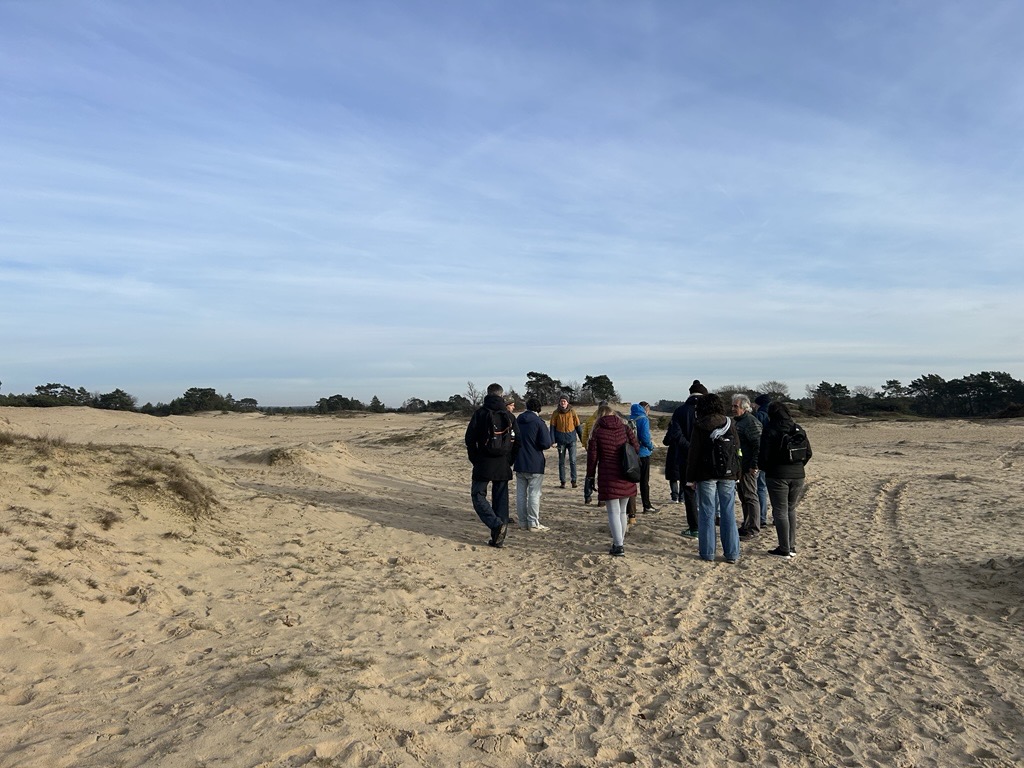
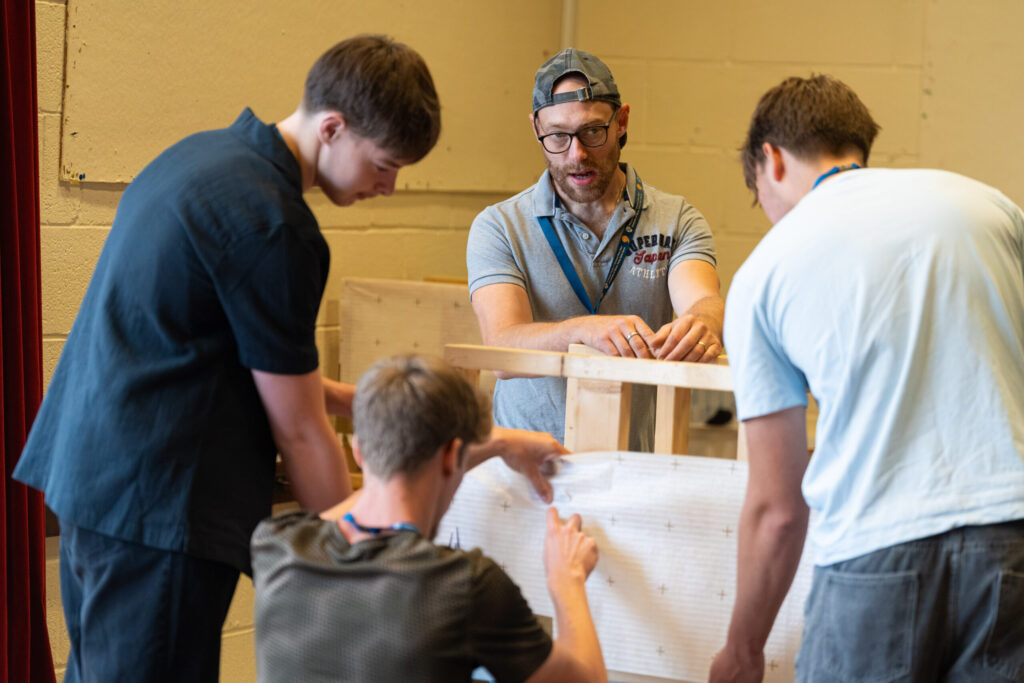
CCRI joined a EUROSION an excursion to Kootwijkerzand, the Netherlands, where wind has eroded the land.
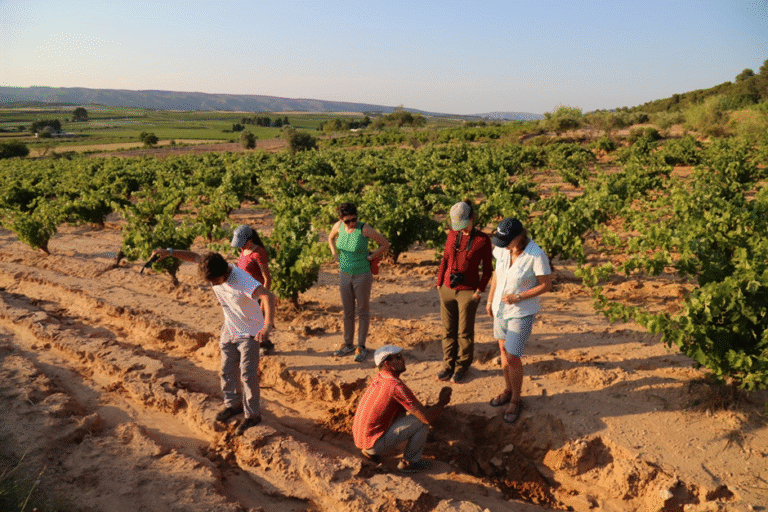
Main image: Scientists discuss soil erosion in vineyards in Les Alcusses valley near Moixent, Eastern Spain (credit Artemi Cerdà, distributed via imaggeo.egu.eu; licenced under CC BY 3.0)
More information
About EUROSION
EUROSION (European Soil Erosion Monitoring and Modelling Network for Sustainable Agricultural Land Management) aims to create a robust monitoring network to assess soil erosion status and trends across spatial and temporal scales and promote best management practices to agricultural land managers and decision-makers to reduce soil erosion.
Any questions? Contact Charlotte Chivers: cchivers@glos.ac.uk
The CCRI EUROSION team


Stay connected. Sign up to the CCRI newsletter.